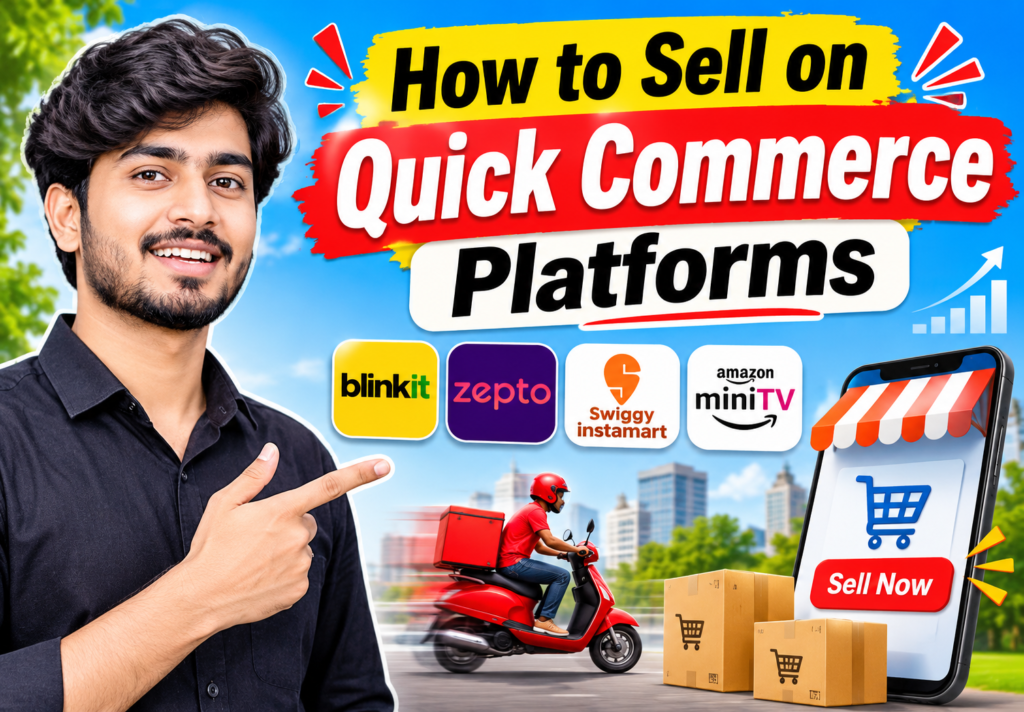
Learn how to sell on quick commerce platforms in India. Explore seller registration, documentation, product selection, commissions, pricing, and strategies to grow your business.
Ran out of milk at 9 p.m.? Millions of Indians now just open an app and get it in minutes. Quick commerce platforms in India have changed how people shop, and for brands, manufacturers, and local sellers, they’ve opened a fast-growing new sales channel worth exploring.
What Are Quick Commerce Platforms?
Quick commerce, often called q-commerce, is online shopping built for speed. Instead of waiting a day or two, customers get groceries, snacks, personal care items, and even electronics delivered in about 10 to 30 minutes.
The quick commerce business model depends on dark stores. These are small warehouses, closed to walk-in shoppers, placed inside busy neighbourhoods. Each one stocks a few thousand popular products. When you place an order, staff pick and pack it within minutes, and a rider covers only a short distance. Local inventory is what makes the speed possible.
Popular Quick Commerce Platforms in India
Each of the major quick commerce platforms in India works with brands a little differently.
Blinkit
Owned by Eternal (formerly Zomato), Blinkit covers groceries, beauty, electronics, and gifting. To sell on Blinkit, brands apply through its Seller Hub and work with an assigned category manager.
Zepto
Zepto is known for 10-minute grocery delivery. If you want to sell on Zepto, you submit a brand partner interest form, and its team reviews demand and fit.
Swiggy Instamart
Part of Swiggy, Instamart accepts brand applications through its partner portal before a category manager takes over.
BigBasket BB Now
Tata-owned BigBasket runs BB Now for fast delivery, suited to grocery and household brands.
Flipkart Minutes is a fast-growing newcomer too. In June 2026 it crossed 1,000 micro fulfillment centres across 130+ cities, so it’s worth researching how to sell on Flipkart Minutes as well.
Who Can Sell on Quick Commerce Platforms?
Quick commerce business opportunities aren’t limited to big brands. Platforms typically onboard:
- Manufacturers with their own registered products
- D2C brands selling snacks, skincare, or home goods
- FMCG businesses with fast-moving everyday items
- Local retailers with a strong regional brand
- Distributors and wholesalers holding a brand authorisation letter
The main quick commerce seller requirements are legal registration, consistent supply, and products that meet quality and labelling rules.
Documents Required for Quick Commerce Seller Registration
Keep these ready before you apply. Having them in order speeds up quick commerce seller registration considerably.
- GST registration, where applicable. Platforms supplying warehouses in several states may also ask you to add each state as an Additional Place of Business.
- PAN card for the business or proprietor
- Business registration proof, such as a partnership deed or certificate of incorporation
- Bank account details with a cancelled cheque
- Product information, including SKUs, MRP, barcodes, pack sizes, and shelf life
- Trademark certificate or brand authorisation letter if you’re not the brand owner
- FSSAI licence for food and beverage businesses
Step-by-Step Process to Sell on Quick Commerce Platforms
- Choose the right platform. Check which apps are strongest in your target cities and categories.
- Select profitable products. Fast-moving items with good shelf life and healthy margins work best.
- Contact the onboarding team. For example, if you’re wondering how to register as a seller on Blinkit, start at its Seller Hub (seller.blinkit.com). Swiggy Instamart uses its partner page (swiggy.com/instamart-partner), and Zepto has a brand partner form.
- Submit your documents. Upload your GST, PAN, bank, and licence details, then sign the seller agreement.
- Complete product listing. A category manager usually reviews and approves your catalogue before it goes live.
- Manage inventory and fulfillment. Most platforms send purchase orders, and you deliver stock to their warehouses or dark stores on time.
Platforms review applications for demand and fit, so approval isn’t guaranteed and can take a few weeks.
Quick Commerce Commission Charges and Other Costs
Running a quick commerce business in India involves more than one fee. Expect a platform commission, usually a percentage of the selling price that varies by category. On top of that, you may pay logistics, storage, and handling charges, plus costs for returns or expired stock. Most brands also fund discounts and sponsored listings. Quick commerce commission charges differ by platform and are set in your seller agreement, so build your product margins around the final negotiated terms.
Tips to Grow Your Business on Quick Commerce Platforms
- Keep stock steady. An out-of-stock product disappears from the app, and shoppers quickly pick a rival.
- Price competitively. Customers compare prices across apps in seconds.
- Invest in quality and packaging. Products are handled fast, so sturdy, leak-proof packs reduce damage and returns.
- Focus on high-demand items. Start with your best sellers before expanding the range.
- Track customer feedback. Ratings and complaints reveal problems early.
- Optimise listings. Use clear titles, accurate weights, and bright product images.
Your Products, Delivered in Minutes: Time to Get Started
Quick commerce platforms in India give sellers direct access to customers who want products right now. The opportunity is real, but so are the costs and requirements. Research each platform’s terms, prepare your documents, and start with your strongest products to build a profitable presence.
Frequently Asked Questions
How can I start selling on quick commerce platforms in India?
Pick a platform that is strong in your city, prepare GST, PAN, bank, and licence documents, then apply through its seller or brand partner page and complete onboarding with its category team.
What documents are required to sell on quick commerce platforms?
You usually need GST registration, a PAN card, business registration proof, bank details with a cancelled cheque, product details, brand authorisation if applicable, and an FSSAI licence for food items.
Can small businesses and startups sell on Blinkit, Zepto, and Swiggy Instamart?
Yes. Small businesses and startups can apply, but platforms review demand, product fit, and supply capacity. A registered brand, steady inventory, and competitive pricing improve your chances of approval.
Which products sell best on quick commerce platforms in India?
Daily essentials sell best, including groceries, snacks, beverages, dairy, personal care, and household items. Gifts, small electronics, and impulse buys also perform well, especially during festivals and evenings.
Is selling on quick commerce platforms profitable?
It can be profitable if your margins cover commissions, logistics, discounts, and advertising. Sellers who price carefully, manage stock well, and focus on high-demand products usually see better returns.